Most designers who code stop at the surface. They learn enough React to build a component, enough CSS to make it look right, and move on. That works -until it doesn’t.
The problem with surface knowledge
When something breaks, you debug by guessing. When you need to make a decision about architecture, you defer to someone else. When a developer pushes back on an implementation, you can’t tell if it’s a real constraint or a preference.
Surface knowledge makes you dependent.
Going one layer deeper
You don’t need to become a systems engineer. But understanding why your tools work the way they do changes how you use them.
For example:
- Knowing how the browser paints pixels explains why some CSS properties trigger layout shifts and others don’t
- Understanding how bundlers resolve modules explains why your imports work in one project and break in another
- Learning how your component framework handles reactivity explains when state updates will feel instant and when they’ll feel sluggish
The compounding effect
Every time you learn something about your stack, you make better decisions. Those decisions compound. In six months, you’re not just faster -you’re making different choices entirely.
The developer who understands their tools doesn’t just build features. They build features that are easier to maintain, faster to render, and simpler to extend.
Where to start
Pick the tool you use most and read its documentation. Not the getting-started guide -the concepts section. The part that explains the mental model behind the API.
Then build something small that tests that mental model. Break it on purpose. See what happens. If something catches your interest along the way, I’d recommend taking notes. Writing is a good way to learn too. In my case, I use Obsidian.
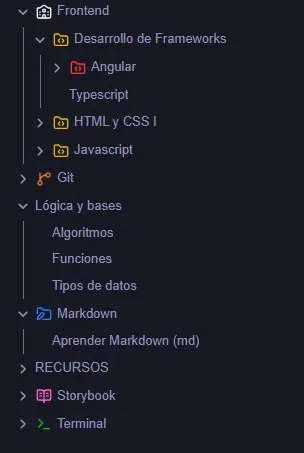 Some topics from my notes
That’s how you stop being a prisoner of your tools and start being someone who builds with freedom. I still don’t know everything I want to know, but every day I take a step forward. I encourage you to learn a little more, every day.